

.avif)
US Shiftworker

US Shiftworker
Why Transportation Is a Strategic Priority for Construction Sites
Unreliable commutes cost construction employers productivity, safety, and workers. Here's why transportation deserves the same rigor as any other site input.


The Real Cost of Ignoring the Commute
Every construction project runs on a tight sequence of dependencies. Materials need to arrive on time, permits need to clear, subcontractors need to be coordinated. But there's one dependency that quietly determines whether all the rest even matters: can your workforce actually get to site?
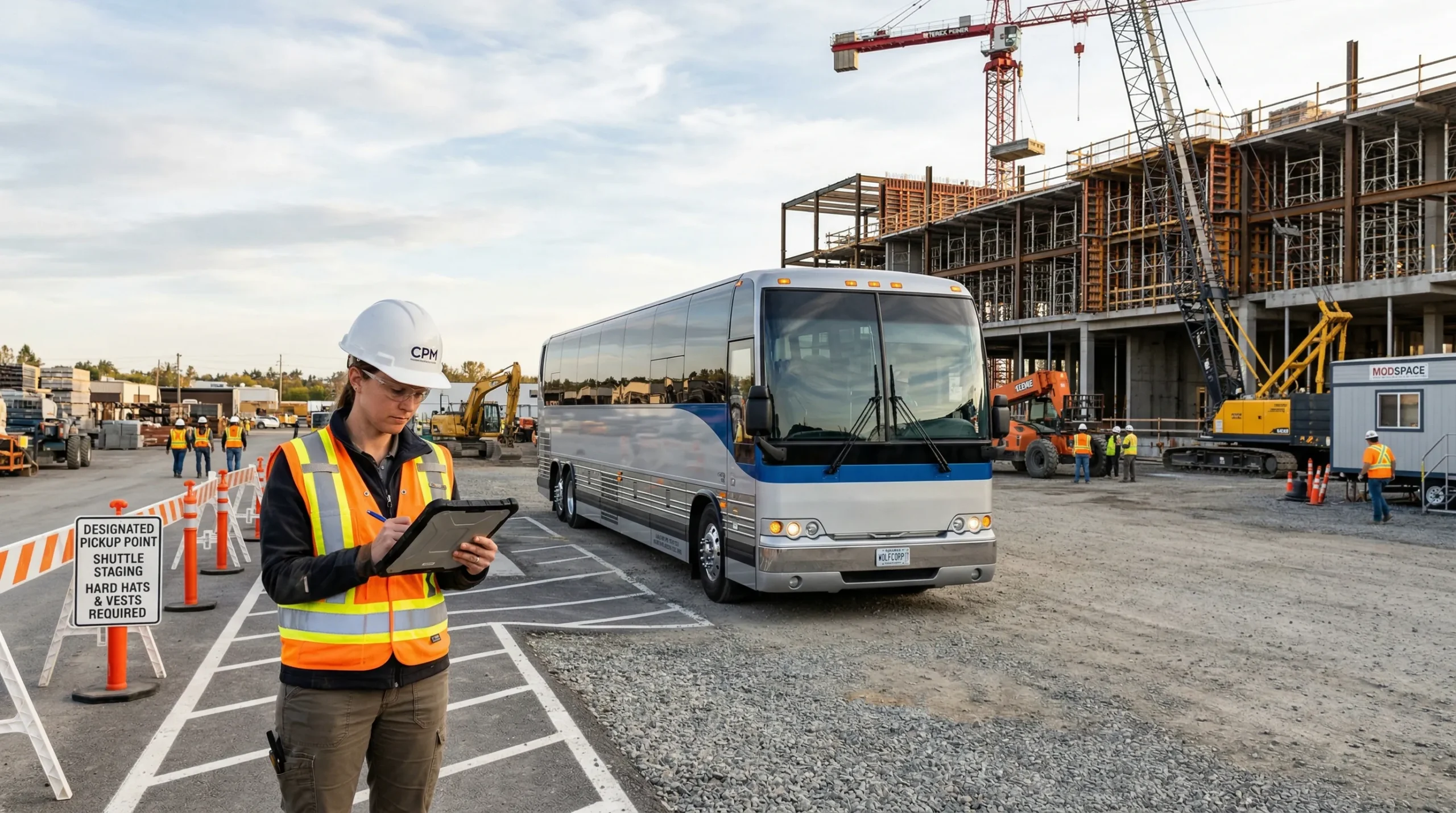
Construction sites are rarely located next to public transit. They're often in industrial parks, greenfield developments, or areas still being built out, the very places transit infrastructure hasn't caught up to yet. For the workers who make up general labor, trades, and site crews, that gap isn't a minor inconvenience. It's a daily barrier that shapes whether they show up, how tired they are when they do, and whether they stay on the job at all.
When transportation isn't planned deliberately, the costs show up in ways that are easy to miss on a budget line but hard to miss on a job site:
Late starts and lost productivity. Workers relying on unreliable rides, long transit connections, or car-dependent commutes arrive late, or don't arrive at all. On a site where trades are sequenced hour by hour, one crew's late start cascades into delays for everyone downstream.
Higher turnover on already-strained labor pools. Construction already faces a persistent labor shortage. When the only way to get to site is an unreliable, expensive, or exhausting commute, workers take the next job that doesn't ask that of them.
Safety and fatigue risk. Long, multi-leg commutes, especially for early shift starts, mean workers arrive tired before they've even picked up a tool. On sites where attention and physical safety matter, that's not a small factor.
Parking and site congestion. Every worker who drives themselves needs parking, and construction sites rarely have enough. The result is overflow parking, site congestion, and time lost just getting from car to work area.
Why Transportation Is an Operational Lever, Not Just a Perk
The employers who get ahead of this treat transportation the way they treat any other site input: as something to plan, resource, and manage, not something to leave to chance.
A well-run shuttle or workforce transportation program does more than move people. It:
Expands the available labor pool by making the site reachable for workers who don't have a car or don't live near it, often unlocking talent pools competitors aren't tapping.
Improves attendance and punctuality, because a scheduled, reliable ride removes the variability of personal commutes.
Reduces turnover, because a predictable, comfortable commute removes one of the most common reasons workers leave physically demanding jobs.
Frees up site space that would otherwise go to parking, and cuts down on the congestion and safety risk of large volumes of individual vehicles moving through an active site.
Signals to the workforce that their time and safety matter, a meaningful factor in an industry where employers increasingly compete on more than just wage.
Turning a Cost Center Into a Competitive Advantage
The instinct is to treat transportation as overhead, something to minimize. But for construction employers competing for the same limited labor pool, a well-managed transportation program can be a genuine differentiator: it's often cited by workers themselves as a reason for choosing one job over another when the pay is comparable.
The employers seeing the best results aren't the ones improvising transportation site by site. They're the ones building a repeatable, professionally managed program, one where routing is optimized, reliability is tracked, and the whole thing is handled by a single accountable partner rather than left to informal carpools or ad hoc solutions that fall apart the moment one person can't drive.
The Takeaway
Construction projects are won and lost on execution, and execution depends on having your workforce on site, on time, every day. Transportation isn't a peripheral HR concern, it's an operational input with a direct line to productivity, safety, retention, and cost. Treating it with the same rigor as any other part of the project plan isn't just good practice. It's a competitive advantage.
In This Article:
Frequently asked questions
Why is transportation important on construction sites?

Because construction sites are rarely near public transit, unreliable commutes directly cause late starts, lower attendance, and higher turnover. Transportation determines whether your workforce can consistently reach the site on time.
How does a shuttle service help with construction worker retention?
A reliable, scheduled shuttle removes one of the most common reasons workers leave physically demanding jobs: an unpredictable or exhausting commute. It also expands your labor pool to workers who don't have a car or live nearby.
What are the safety risks of poor commute planning on job sites?
Long, multi-leg commutes for early shift starts lead to fatigue before work even begins, raising the risk of accidents. Poor transport planning can also cause overflow parking and congestion that create additional hazards on site.
Does providing transportation reduce construction site costs?
Yes. A managed transportation program cuts costs tied to late starts, absenteeism, turnover, and site congestion, and frees up space otherwise used for worker parking, turning transportation from overhead into an operational advantage.
What does a well-managed construction transportation program look like?
It's a repeatable, professionally run service, not ad hoc carpools, with optimized routing, tracked reliability, and a single accountable partner managing the whole program rather than leaving it to chance.

ABOUT ZEELO
We help companies and schools achieve their transportation program goals
COMMUTERS
Corporate shuttles

Retain employees, increase happiness

COMMUTERS
Warehouse/Distribution
Attract employees, increase productivity

EDUCATION
Schools & Universities

Save 20% on running costs & deliver a 100% safe school transportation program

OPERATORS
Become a partner
Increase revenue and access contracts in your area

Want to know how we can help you?
Get in touch for a free consultation to see how zeelo could help your business.

More articles like this one
.avif)

Trusted. Every trip.
Zeelo is the smart bus platform for organizations. We design, manage and optimize transport programs to help our clients achieve their goals.


